
The ruler wanted five food for three timber. The towns actually traded.
Follow a ruler’s counteroffer from timber and food terms to a signed trade route and its two recorded daily deliveries.
Maren, the holder of Honeybrook, needed timber. Beawyn Hollow had timber to sell, a village to run and a shift behind the bar at Honeyford’s inn. Maren went to the inn and typed an offer. Honeyford would send three timber a day, and Honeybrook would send three food in return.
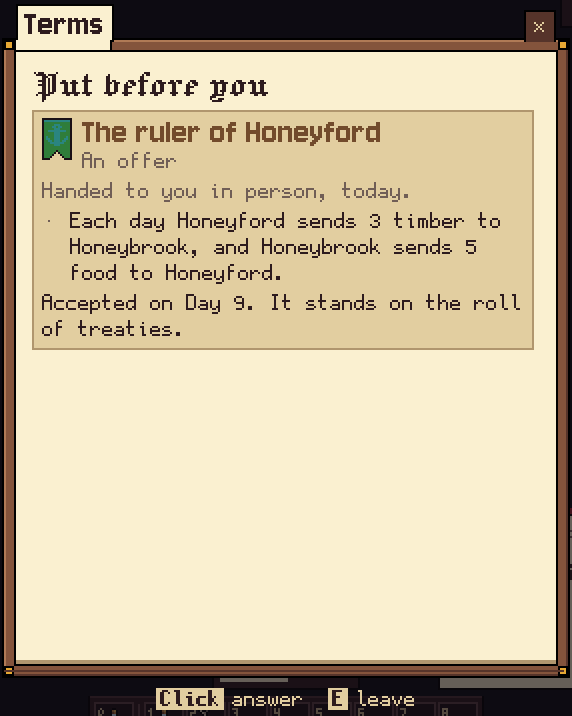
In an early conversation, Beawyn refused. In a separate run, after Maren had agreed to pay tribute, she was willing to talk trade. Her price for three timber was five food a day. She used her own words to explain why the timber was dear. Then she put an offer in Maren’s hands.
What changed when Maren accepted
The offer named both towns, both goods, the quantities and how often the deliveries would happen. Maren could still walk away. After the player clicked Accept, the route appeared on the treaty roll on day nine. The browser check advanced the world by two days and two hours. Twice, Honeyford supplied three timber to Honeybrook. Twice, Honeybrook supplied five food to Honeyford. The two extra portions Beawyn held out for were leaving Maren’s stores every day.
Those numbers come from a recorded development session on seed 4242. The team set up Maren’s holding and advanced the clock to inspect the deliveries. The audience ran through the game’s conversation interface with the live language model. Another ruler, or another meeting with this one, can yield different terms.
The bargain leaves the player with an ordinary political question. Three timber may be worth five food when a building needs finishing. Will it still be a good price after the roof goes on and the next delivery comes due?
If the daily cost looks steep, compare what a gift, tribute or trade route asks of the town. If you’re comparing games, see other strategy games where you can negotiate with AI rulers.
How to negotiate a treaty · See how a ruler can counter an offer